Deepfakes are getting smarter. Our defenses must get more human.


Artificial intelligence has reached a level of sophistication where voices can now be cloned and used in real time, meaning an attacker can sound like anyone during a live conversation. In other words, what once required minutes or hours of processing can now be achieved instantly. (This video demonstrates just how easy it is to produce hyper-realistic deepfake voices.)
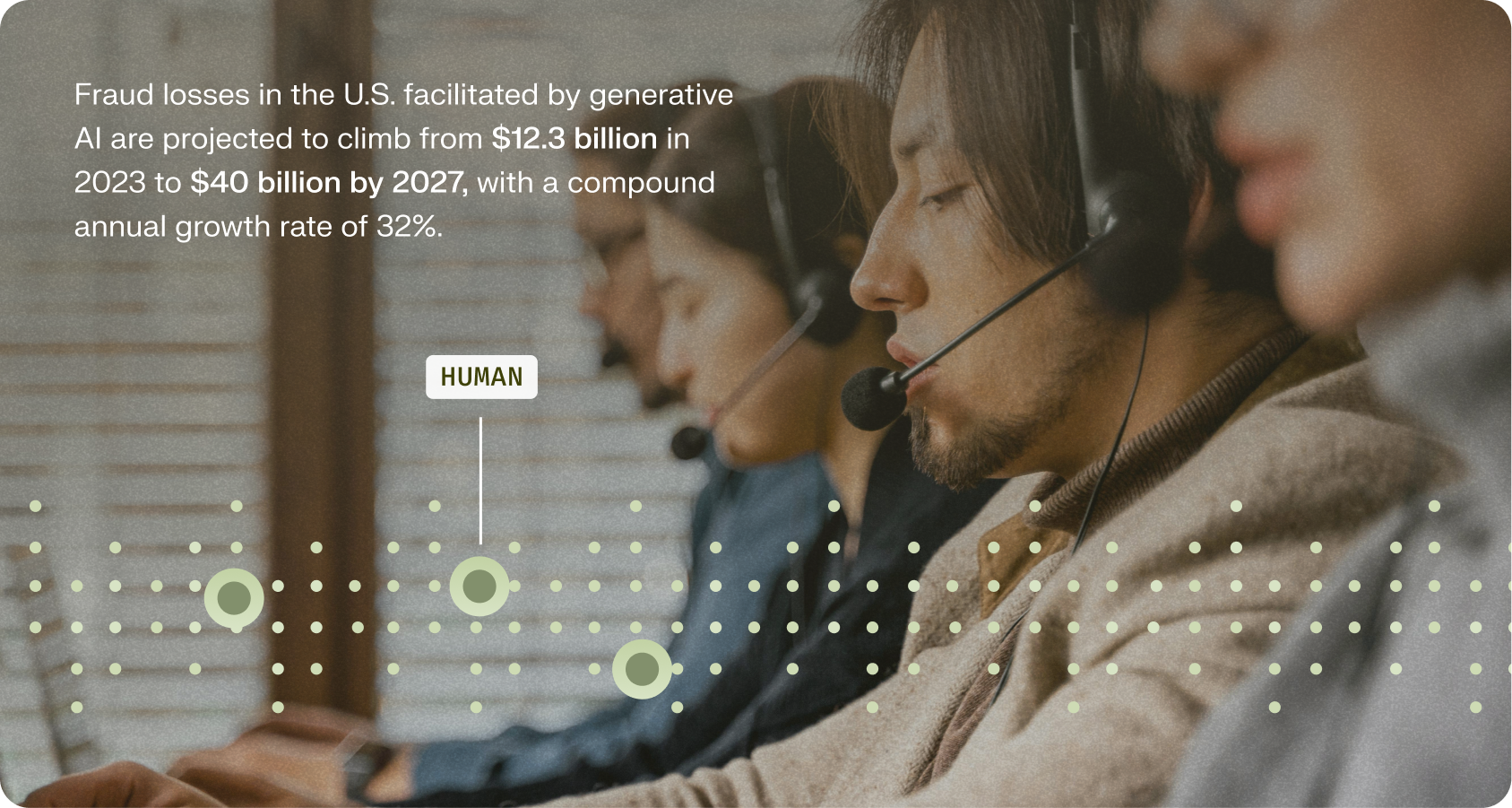
When this technology falls into the wrong hands, it can facilitate a wide variety of harmful scams. Bad actors are already exploiting similar tools to swindle victims:
- “Grandparent scams”, where fraudsters convince victims that they are speaking to a distressed family member
- Romance scams, where perpetrators begin a fake romantic relationship with victims
- Sophisticated impersonation schemes targeting banks, employers and healthcare providers
- Recent reporting has even found that deepfakes are already being submitted as legal evidence in courtrooms.
The problem is only getting more difficult to constrain as AI tools continue to flourish at an exponential rate (see: Sora 2, OpenAI’s recently launched–and incredibly powerful–generative AI video model).
The people most at risk are often those least equipped to defend themselves due to low digital literacy and/or high-stress living with scarce mental bandwidth to evaluate all potential risks, such as older adults and marginalized communities who already face barriers to trust.
Combating deepfake scams requires a human-centered and multi-layered approach that blends education, community engagement, and cutting-edge applied machine learning research.
Here are three common-sense ways forward.
1. Build community awareness where it matters most
Many of the people most vulnerable to deepfake scams (for example, the elderly) are overwhelmed with information and less likely to stay up-to-date with AI safety online. Therefore, cultural interventions and cybersecurity awareness efforts must branch out beyond digital spaces.

To reach the elderly and other vulnerable members of our communities, we need a multifaceted online/offline approach to creating awareness, that meets these individuals where they are, including:
- Healthcare settings: Doctors’ offices, pharmacies and community clinics can distribute simple branded giveaways on recognizing scams.
- Financial institutions: Banks can integrate scam-awareness family guides into their fraud-prevention emails or ATM screens.
- Free-to-air/cable TV ads: With younger populations now largely consuming television via streaming platforms, traditional free-to-air and cable TV attract a greater proportion of elderly adults. Ad slots via these channels could be an effective means of sharing interviews with deepfake scams victims.
- Families: Encourage the use of “safe words” for urgent or unexpected calls.
Just as public-health campaigns once taught previous generations how to wash their hands or wear seatbelts, communities can surface common sense safety habits for the digital age. These new-age campaigns should be inclusive to ensure that as many populations are reached as possible.
2. Fight fire with fire
While AI has increased the ease and speed with which convincing scams can be carried out, the same tech can also be harnessed to offer new defense capabilities. That’s what we’re proudly building at Kintsugi with our latest solution Signal.
Since 2019, we have been developing AI-powered voice analysis technology that detects signs of depression and anxiety, to help individuals get the right level of mental health support at the right time.
But we recently expanded into deepfake detection when we realized that the voice biomarkers that indicate the presence of mental distress are the same subtle biological signatures that make someone human in the first place.
In other words, the biomarkers that we built are models to detect aren’t present in deepfake voices. So Kintsugi’s Signal solution can determine, nearly 100% of the time, and in seconds, whether a voice is human or AI.
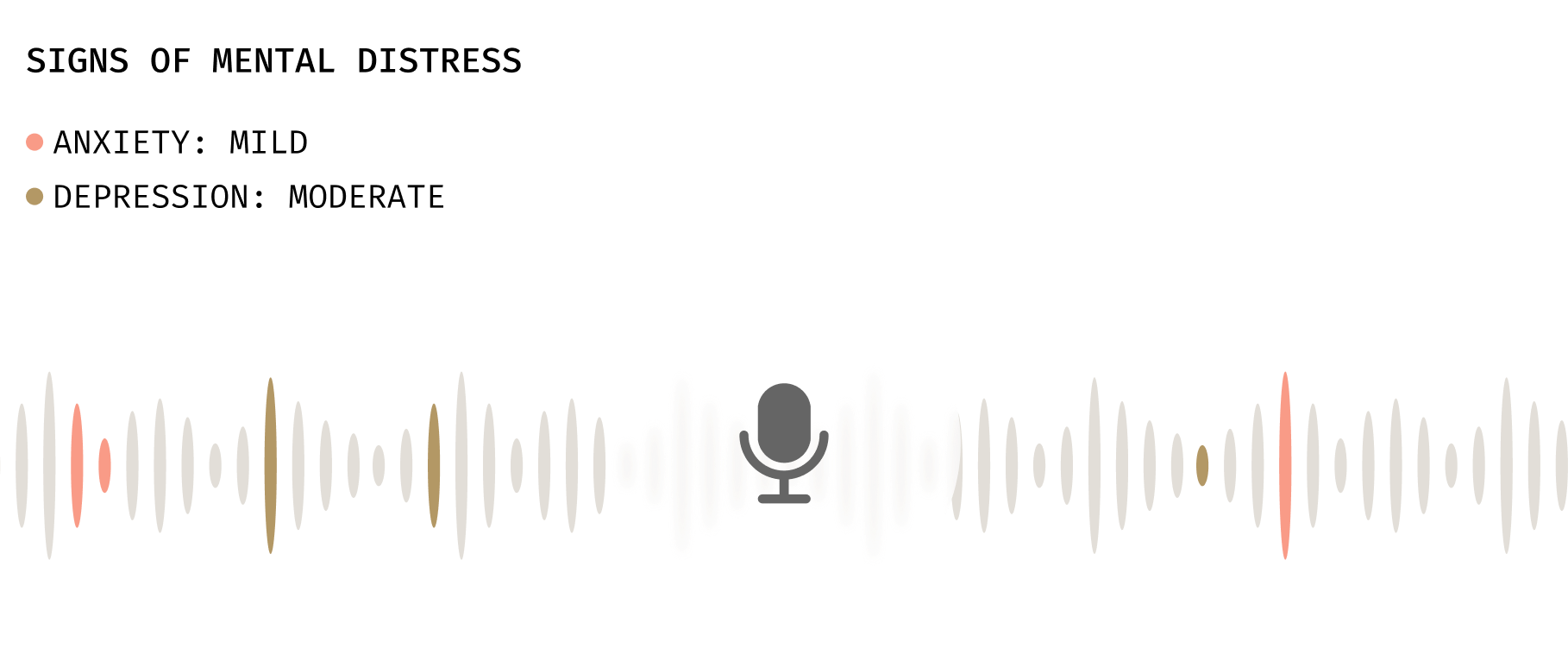
Digging into this further, our models operate in the signal-processing and physical latent space of speech—not language or semantics. They capture subtle timing, prosodic variability, cognitive load, and physiological markers that reflect how speech is produced, not what is said. Therefore, our models work no matter what language or accent is being spoken.
Synthetic voices can sound fluent, but they don’t carry the same biological and cognitive artifacts. It is precisely those subtle artifacts that Signal is designed to detect.
The next step is ensuring that this tech is actually being embedded where it’s needed most: into call centers, videoconferencing platforms and enterprise security systems, in order to automatically and instantly verify whether users are interacting with a real person. The goal is to give frontline workers and consumers a reliable early-warning system that flags potential deepfakes well before harm occurs.
What’s more, Signal can be layered with behavioral health detection models that can create extra defense against scams. For example, our solution can identify if an “anxious” family member urgently asking for money is genuinely anxious or not, which can provide an additional clue that the caller isn’t who the victim thinks they are.
.png)
In this way, the responsibility for detecting and stopping deepfakes is shared between individuals and the platforms and institutions that enable digital interactions–telecommunications providers, technology companies, financial institutions, healthcare systems, and so on–rather than falling solely on potential victims.
However, since deepfake tools are advancing rapidly, detection models must do so even faster. This means regular testing, independent audits and global cooperation on evaluation standards, similar to how cybersecurity tools undergo ongoing stress testing.
3. Reconnect technology with empathy and accountability
When used responsibly, AI can reinforce digital trust. But its deployment should be aligned with human interests. Transparency must be core: individuals should know when their voice is being analyzed, how data is protected and what recourse they have if systems make errors.
As we build new defenses, we need to ensure that innovation is grounded in ethics, so we can create systems that safeguard authenticity while reaffirming our shared humanity. After all, the issue isn’t technology itself: it's when technology falls into the wrong hands.
Deepfake fraud is a growing challenge that affects society at large. It impacts trust in our institutions, and even our own families’ voices. Therefore, it’s up to society at large to tackle it.
There’s no silver bullet. Bad actors are constantly evolving their tactics, so governments, tech companies, and communities must continually work together to develop safeguards and public awareness campaigns that ensure we stay one step ahead.
Contact us to book a demo.
Join our mailing list for regular updates from Kintsugi